How to Learn Affiliate Marketing and Build a Real Online Business
I have been working with affiliate marketing for over a decade, and I still remember the early days when I had no idea what I was doing. I signed up for an Amazon Affiliate Program account, wrote a few product reviews, and waited for the money to roll in. Nothing happened. That was my first lesson: affiliate marketing is not a get-rich-quick scheme. It is a legitimate business model that rewards patience, strategy, and genuine value creation.
Today, the landscape has shifted dramatically. You no longer need to be a charismatic influencer with millions of followers to make a decent passive income. The real opportunity lies in building AI-powered affiliate websites that rank on Google and attract organic traffic without requiring technical skills or influencer status. But before you jump into that, you need to properly learn affiliate marketing from the ground up.
Start With Niche Selection, Not Tools
Most beginners make the mistake of buying courses or software before they even pick a niche. They want to learn affiliate marketing by jumping straight into keyword research tools like Ahrefs or Semrush. Those tools are powerful, but they are useless if you do not have a clear target audience in mind. Your first job is to identify a specific group of people with a problem they actively want to solve.
I once worked with a friend who wanted to promote kitchen gadgets. He picked "best blenders" as his focus. That is not a niche; that is a category. A real niche would be "blenders for green smoothies that taste good for people on a vegan diet." The narrower you go, the easier it is to build authority and trust with your readers. And trust is what converts clicks into commissions.
When you are just starting out, do not worry about global competition or massive search volumes. Worry about whether you can genuinely help a small group of people. If you can, the traffic will come over time.
Understanding the Mechanics of Affiliate Income
Affiliate marketing is simple in concept: you promote someone else's product, and when a sale happens through your unique link, you earn a commission. But the reality is more nuanced. You are not selling products; you are curating solutions. Every product review you write should answer a specific question that your target audience is asking right now.

To learn affiliate marketing properly, you need to understand three core pillars: content that attracts, trust that converts, and systems that scale. Most people focus only on the first pillar. They write articles, stuff them with affiliate links, and hope for the best. That rarely works anymore.
You need to build a content management system that allows you to publish consistently without burning out. Many successful affiliates use WordPress as their platform of choice. It is flexible, SEO-friendly, and integrates well with almost every affiliate network you could want. Pair it with a reliable host like WP Engine, and you have a solid foundation.
But tools alone do not build a business. You have to learn how to use Google Search Console to understand what your audience is actually searching for. You have to dig into search analytics to see which pages are already getting impressions but no clicks, and then improve those pages. That is how you turn a trickle of traffic into a steady stream.
Keyword Research Is Your Compass
I have seen people spend weeks writing a single product review for a keyword that gets ten searches a month. That is not a good use of time. When you learn affiliate marketing, you must also learn to prioritize keywords that have commercial intent. Someone searching "best noise-canceling headphones under $100" is much closer to buying than someone searching "how do headphones work."
Long-tail keywords are your best friend, especially when your site is new and has low domain authority. They are easier to rank for, and the traffic they bring is often more targeted. You can find these using free tools like Google Search Console or paid ones like Ahrefs and Semrush. I prefer to start with free data and only invest in paid tools once I have validated my niche.
One practical exercise I recommend: pick one product you genuinely like, write a detailed review around a long-tail keyword, and then monitor its performance in search results over three months. That single review will teach you more about SEO, link building, and conversion than any course ever could.
Content That Actually Helps People
The days of thin content are over. Google is too smart, and users are too savvy. To learn affiliate marketing effectively, you must write content that solves a real problem. That means answering questions your audience has not even thought to ask yet.
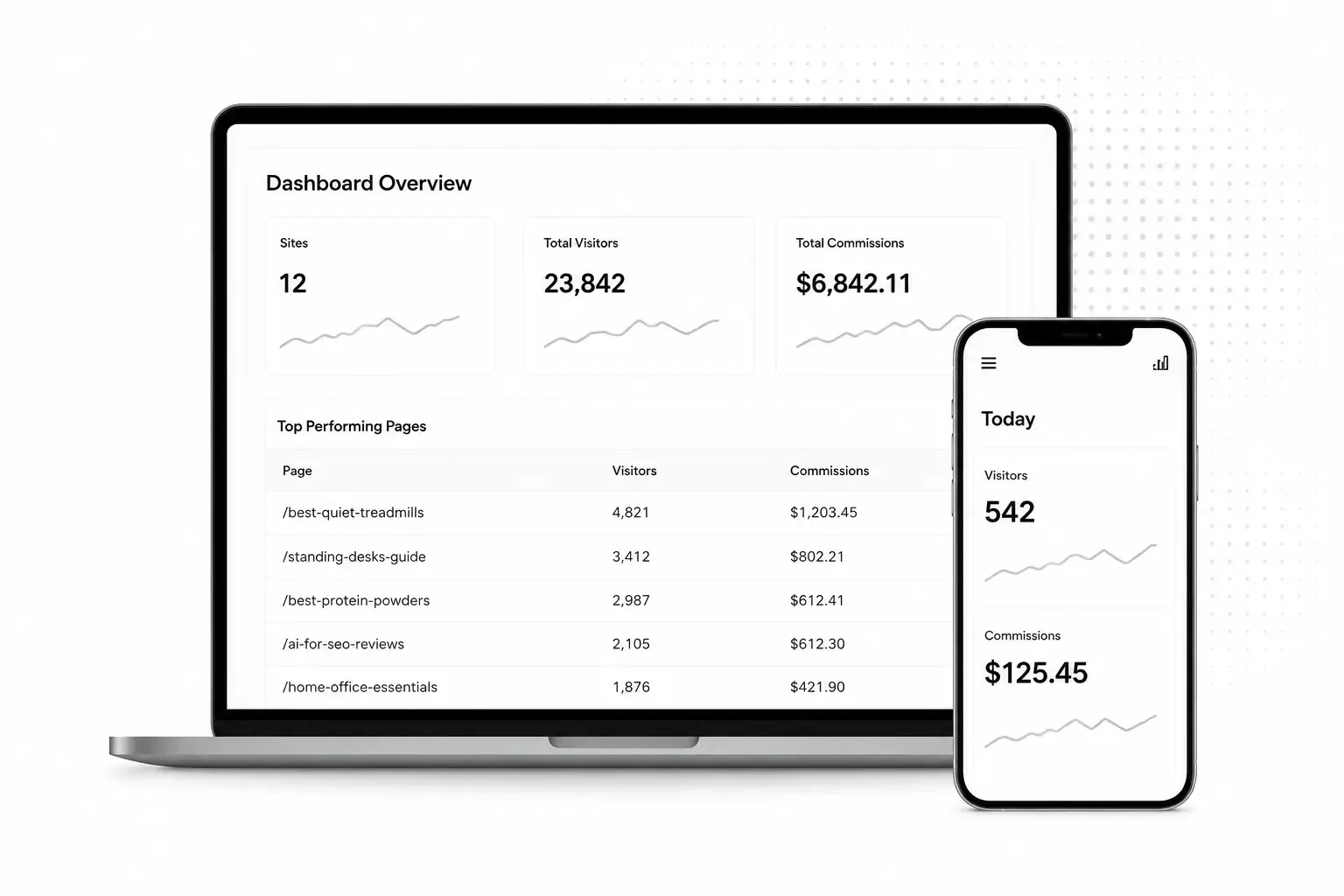
For example, if you are writing a review of a WordPress plugin for affiliate marketers, do not just list features. Show a real use case. Walk through how you set it up. Include screenshots (or describe the process clearly). Mention alternatives and explain why you chose this one. That kind of depth builds authority, and authority leads to higher conversion rates.
I also recommend using ChatGPT as a brainstorming partner, not a ghostwriter. You can ask it for angles you might have missed, or to help you outline a comparison article. But the final voice should be yours. Readers can tell when a review is generic or written by someone who has never actually used the product.
Link Building and Domain Authority
You can write the best content in the world, but if nobody links to it, you will struggle to rank. Link building is the part of affiliate marketing that most people dread, but it does not have to be painful. Start by creating genuinely linkable assets: original research, detailed tutorials, or comparison tables that other sites would want to reference.
Then, reach out to other bloggers in your niche. Offer a compliment on their work and suggest a resource that complements what they already wrote. Do not ask for a link directly; just make them aware that your content exists. Many will link to it naturally if it adds value to their readers.
Over time, your domain authority will increase, and you will find it easier to rank for competitive terms. But that takes months of consistent effort. There is no shortcut, and anyone who promises one is selling something you should avoid.
Affiliate Networks and Programs
Beyond the Amazon Affiliate Program, there are hundreds of affiliate networks covering every possible niche. Some specialize in digital products, others in physical goods. When you are ready to expand, look for programs that offer recurring commissions or high-ticket items. A single sale of a premium course or software subscription can earn you more than fifty sales of cheap gadgets.

But be careful: not all programs are worth your time. Some have very short cookie windows, meaning if the buyer does not purchase within a few hours, you lose the commission. Others have strict terms about how you can promote their products. Read the fine print before you invest weeks of work.
If you are serious about building passive income, treat your affiliate site as a business from day one. That means tracking every dollar, testing different calls to action, and constantly improving your content. It is not glamorous, but it works.
To truly learn affiliate marketing, you have to do it. Reading about it is not enough. Start with one niche, one product, and one piece of content. Publish it. Promote it. Analyze what happened. Then do it again, but better. That iterative process is the only path to real, sustainable success.